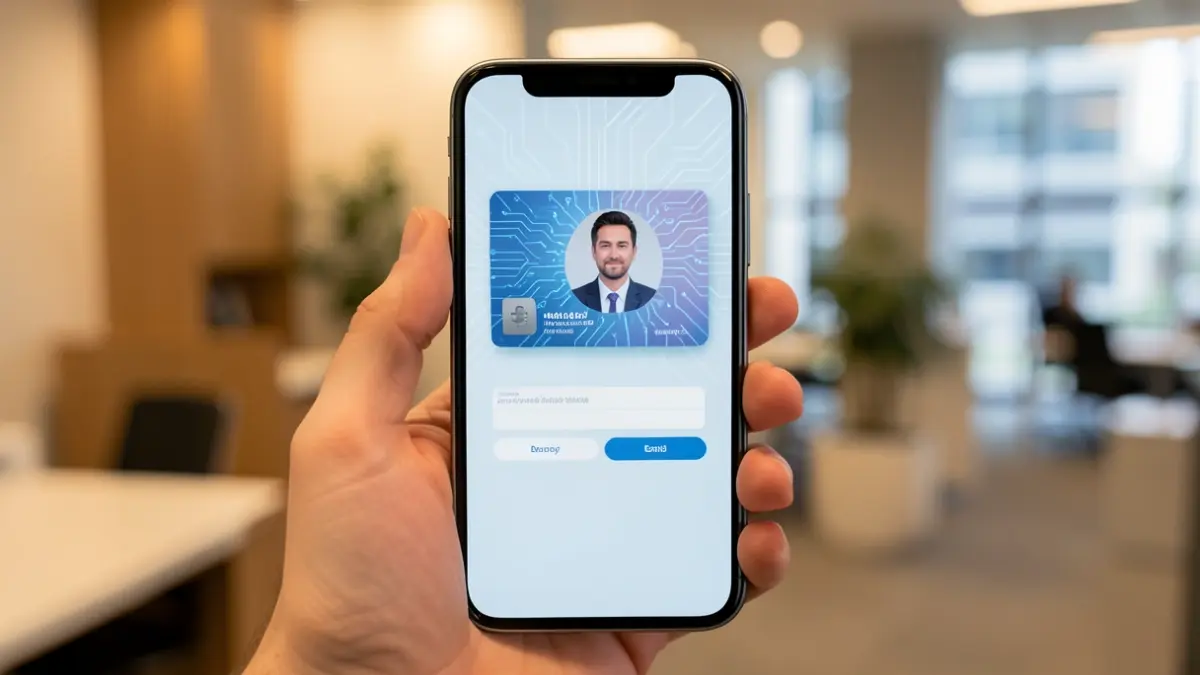
An mDL offers a more secure and user-friendly experience than a physical identification card. Its information is cryptographically protected, making it difficult to steal or fake. An mDL eliminates the need to upload photos of a physical ID card while also providing strong security because of the cryptographic information it contains. It can be used either in person or online, potentially making many digital transactions easier, such as opening a bank account online or accessing government benefits.
Despite these benefits, very few online service providers currently accept mDLs. Bill Fisher, a security engineer at NIST, described the situation as a "chicken-and-egg problem." He noted that consumers are unlikely to adopt mDLs unless they are accepted in high-value, everyday use cases, while companies are hesitant to invest in mDL integration without widespread consumer demand or adoption.
This issue motivated a project from NIST’s National Cybersecurity Center of Excellence (NCCoE). The project’s draft report, entitled Digital Identities — Mobile Driver’s License (mDL): Enabling Secure and Interoperable Online Use (NIST Special Publication 1800-42), offers tools and resources to help organizations assess the feasibility of integrating mDLs with their current systems. The project brought together stakeholders from across the mDL ecosystem, including technology companies, government agencies, and five of the 10 largest U.S. banks.
“"Our goal is to help overcome the barriers preventing organizations from accepting mDLs online. By working with industry to test real-world applications, we can identify what’s working, what barriers remain, and provide a path to update their infrastructure so they can accommodate mDLs at a large scale."
The project created a reference architecture that demonstrates three capabilities: how users can present their mDLs when verifying their identity for an online transaction; how an mDL could be requested and presented in high-risk scenarios, such as high-dollar transactions or account recovery, to reestablish trust; and how to issue a phishing-resistant authenticator to a user. Fisher stated that the system was built using commercially available, off-the-shelf technology, software, and standards to demonstrate how organizations can implement mDLs now with minimum difficulty.
The draft report details the reference architecture and its components, outlining how organizations and their customers can benefit from improved security capabilities and privacy protections. It also outlines potential threats to an mDL ecosystem and risk mitigations, offering references to other NIST publications, including the NIST Privacy Framework and the security and privacy control catalog. Additionally, the report offers recommendations on improving the user experience, including seven best practices observed during usability testing with volunteers.
While financial institutions provided the initial demonstration use case, the report contains information useful to any organization that accepts physical IDs and is seeking to accept mDLs. Other situations of broader applicability include accessing healthcare information and interacting with state and federal government services. Fisher emphasized that while technology is moving in this direction, current adoption is limited by the maturity of the surrounding ecosystem, requiring deep coordination among government ID issuers, technology providers, and organizations across economic sectors.
NIST is seeking comments on the report’s draft until December 20, 2026. Comments may be submitted via email at mdl-nccoe [at] nist.gov or via the resource hub page.